Trainspotting Movie Report
I wrote this report as my final project for my freshman year seminar, Authoring Addiction. Throughout the class we explored a lot of addiction literature. My final paper was a movie report on Trainspotting.
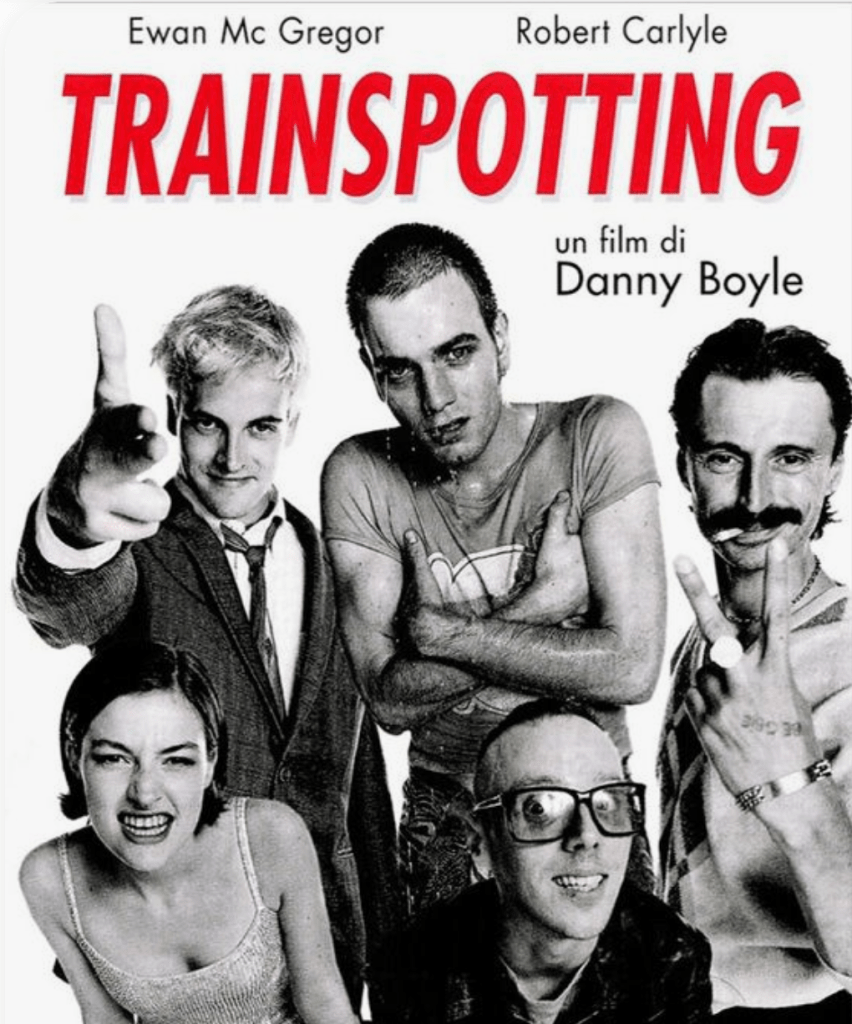
I found Trainspotting’s approach to the description of Scottish youth drug subculture to be particularly intriguing and unique. It depicted heroin in a gut-wrenching and tragic way primarily by facilitating a hallucinogenic sensation for the viewer. Differentiating itself from the other films and texts we have read thus far in class, Trainspotting creates a disturbing and realistic experience for the viewer rather than just pulling emotion from storytelling. In fact, Trainspotting didn’t have much of a plot line or significance in any of the characters; it was merely a time capsule of the youth culture in Scotland in following Mark Renton’s interactions and experiences revolving around his heroin addiction. This approach did not pull emotions towards the characters and their devastating lives. Instead, it focused on creating a sensation for the viewer as a means of demonstrating what a life consumed with heroin and entangled in the drug world would actually feel like. I felt as if Trainspotting was successful in this unprecedented approach to create an impression of not only that lifestyle, but the effects of heroin itself.
Trainspotting captures the gritty reality of hardcore heroin addiction by following the lives of a crew of junkies. Each character is somewhat developed, enough to make the viewer in a strange and twisted way appreciate them as characters but not enough to formulate emotions towards them or a plot line. The plot, or lack thereof, follows Mark Renton through many sobriety attempts with his unreliable crew: Spud, Begbie, Tommy, and his available when convenient underage girlfriend, Diane. There is a pattern throughout the movie of Mark attempting to get clean by separating himself from his friends and then always finding a way back to heroin when they reconvene. At some point, this crew finds themselves in possession of a large sum of money from a drug deal and Mark steals it in the middle of the night, despite the prior deal to all split it. The movie concludes with Mark leaving with the money, making sure to leave his most trusted friends out of the crew, Spud, his share, and then walking off as he talks about how he is going to choose life and get back on track. This lack of a story was quite strategic, as it focused on the drug and its surrounding problems rather than the traditional focus on the characters themselves and the themes and storyline.
The “junkie sickness”, as Mark refers to it, stood out to me as the most crucial aspect of this film to achieve its purpose. This cinematic element of actually allowing the viewer to feel the effects he was feeling on and off heroin was fantastic and gave true insight on what was going on in his head, and in general, the sensation of the heroin high. These eye tricks were incorporated into the film always without warning and would arouse an initial sense of confusion for me before I could connect that it was supposed to be portraying hallucinations he was having associated with a withdrawal or a high. Additionally, just like heroin, this film was deeply addictive itself. It was funny, but also disturbing. It was sometimes light-hearted, but also gut-wrenching. These competing characteristics did not necessarily make it enjoyable or easy to watch, but not easy to turn off either. The aspect of it being bad but you want to look parallels the concept of heroin and other addictive drugs being physically and mentally harmful, but calling you to come back for more.
The first time we experience the hallucinations was the dirty toilet scene. Mark has to immediately use the bathroom because as he described, heroin makes you constipated, so during withdrawal, he can finally relieve himself. He enters into the foulest bathroom and after he relieves himself, he realizes he has lost the pills he had gotten to help bring him down gradually from his withdrawal that he had keistered. He starts fishing around in the filthy, brimming toilet and goes deeper and deeper until his whole head and then his whole body disappears in there. He then appears to be swimming in an ocean and finds the pills at the bottom and then swims back to the surface and climbs out of the toilet. This was meticulously produced so that it seemed realistic enough that he would be so desperate to fish around in a toilet for pills but then you realize at some point it’s in his mind. This creates uncertainty and confusion paired with a jolting stomach churn that really creates an experience that helps the audience feel his desperation in a revolting and acute way.
Another example of this is when Renton takes a particularly strong hit one time and is locked in his room by his parents in an attempt to get sober by going cold turkey. As he lies there in bed the hallucinations begin. This time they are violent, disturbing and jostled around. He sees his girlfriend singing, his friend Allison’s dead baby distorted and crawling on the ceiling and scenes from a TV show. These jostled images and scenes seem so real to the viewer, but they represent the chaos that is penetrating Renton’s heroin focused brain during this withdrawal. Again, these experienced demonstrated so distorted and randomly to the viewer at crucial times makes Trainspotting so successful in achieving its purpose of creating that real sensation for the audience in order to help better understand heroin.
Aside from the cinematic functionality of the eye tricks attributing to the work to build that perception of the near tangible feeling of highs and withdrawals, this movie also contained many concepts and ideas associated with drugs that we have seen throughout other texts and films we analyzed in this class. The notion of drugs changing people to lose sight of themselves and become selfish, greedy and unaware of their priorities is strung across the entire genre of addiction literature. In Trainspotting, there are many instances where it is clear these junkies have lost their values even though the audience doesn’t even have that clear of an idea of their values and personalities in the first place. For instance, in one of the houses in the beginning of the film that Mark and his crew would shoot up in, there was a baby that was crawling around, clearly neglected and always ignored and for the longest time, it was unclear why it was there or to whom it belonged. Then, one night, Allison, a fellow junkie that lived with them, started hysterically crying because her baby had died. Clearly this mother had neglected her child because her life was entirely consumed by heroin and her child had no priority. After this, she says she needs a hit, and Mark says he’ll cook her up one, but “only after me of course”. This terrible thing just occurred, and Mark still decides to put himself first, demonstrating the reoccurring theme that drugs can turn a person cold and selfish. Mark is not only selfish in this instance, but also when he steals all the money at the end that him and his crew had agreed to split up evenly. These types of actions are apparent in characters across the entire genre, for it is typical for drug addicts to lose sight of their values and morals. Similarly, in the intervention episode, the girl who used to be very close with her family, especially her mother, ended up physically and emotionally attacking her mother who was just reaching out to help her. This type of behavior was described as very uncharacteristic of her, as told by other family members. This change in personality happens in the vast majority of characters in stories about addiction, and this demonstrates the mind-altering affects these drugs have on people and explains how families and lives can be ripped apart.
Although a little too graphic and disturbing for me, I found Trainspotting to be intriguing and unique in how it depicted drug use and drug culture. It was very successful in delivering that experience to the viewer to actually experience the drug by watching it almost like actually taking it, and that is how it stands out as so unique and distinct in this larger genre of addiction narratives.
 Laura's Writing Portfolio