Carnegie Book Report
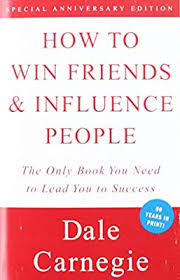
I wrote this report for a management class, Business Policy and Strategy, and the class started off with reading Dale Carnegie’s book, “How to Win Friends and Influence People”. We had to read the book and write about a leader in our lives, good or bad, as defined in the book. I chose to write a rather negative essay on my assistant coach, who demonstrated herself to be a very poor leader, and did not possess the values explained in the book.


Tee Ladouceur was brought on to the Women’s Lacrosse team here at the University of Denver as the assistant attacking coach at the start of the 2017-2018 season and then was let go at the end of the 2018-2019 season. At the time that she was added to the coaching staff, the team had come off of a sub-par season, and the Syracuse lacrosse alum was welcomed with great hope and promise. She was young, full of energy, and much more qualified than the pre-existing attacking coach, so both the players and the coaching staff were excited to have her. She started off on a great foot, making a fun first impression, and letting her passion for the sport drive her ambition as a new coach with fresh ideas.
However, the girls on the team slowly began to dislike her and lose respect for her as a coach for her belittling of players, lack of encouragement, and childish attitude. She showed blatant favoritism towards few players, and belittled and bullied younger players. Further, she did not listen to feedback or suggestions. I chose her because I felt as if I could apply many concepts covered in Carnegie’s book to her in both positive and negative ways. She was in a position of leadership, but she did not create a culture of respect and did not demand a following in an incentivizing fashion. I also chose to do this because I am able to get some testimonials from her players of how she acted towards them.
As I stated above, I believe that what Coach Tee id well was coming in and making a good first impression. Carnegie says, “Actions speak louder than words, and a smile says, ‘I like you. You make me happy. I am glad to see you.’ That is why dogs make such a hit. They are so glad to see us that they almost jump out of their skins. So, naturally, we are glad to see them” (Carnegie, 63). Tee was just like that: an excited dog, when she first met us. She was a little ball of energy and was very refreshing after her predecessor. I am not even an attacker, but I was still excited to work with her. Creating excitement and inviting passion was very great for the team at the time. My only recommendation with this action was that she keep the positivity going throughout her time here. And to reiterate principle 2, which is underrated, Smile.
I thought that chapter 6: How to Spur People On to Success, was particularly applicable in sports and leadership on a sports team. As a coach on a college sports team, you must be a teacher as well as an encourager, and not only is a college lacrosse coach preparing you for championships, but also for life and the lessons and hardships that come with it. As Carnegie explains it, “Praise is like sunlight to the warm human spirit; we cannot flower and grow without it. And yet, while most of us are too ready to apply to others the cold wind of criticism, we are somewhat reluctant to give our fellow the warm sunshine of praise” (Carnegie, 216). In leading a group, one needs to have a sufficient amount of encouragement in order to cultivate an environment of confidence in which people are determined and motivated to put forth their best efforts and perform at a high level. This is something that I think Coach Tee did not exemplify. She constantly was putting people down, and praise and encouragement was not a part of her coaching style. Rather, she would embarrass players and make them feel small. Sophomore attacker Kailee Lammers, speaks about one out of many experiences with Coach Tee doing just so; “One day, I was taking 8 meters before a game and making a lot of them and she pulled me aside and said ‘wow looks like 8 meters is all your good for’”. In this scenario, not only did tee embarrass her in front of her teammates, she made Kailee feel less than appreciated. In another example, Junior attacker Hannah Liddy retells how Coach Tee called her “useless”. Carnegie explains how “using praise rather than criticism is the basic concept of B.F. Skinner’s teachings” (Carnegie, 219) and also that “abilities wither under criticism; they blossom under encouragement. To become a more effective leader of people, apply principle 6: praise the slightest improvement and praise every improvement. Be ‘hearty in your approbation and lavish in your praise’” (Carnegie 220). Carnegie reiterates the merits of praise and how this cultivates improvement and spurs success and growth. This is something that Tee did not practice, and therefore did not allow her players to reach their utmost potential. So, my recommendation for this, was for her to praise more, give more appreciation for her talented players, reward them for improving or taking directions well, and to give positive feedback. As Carnegie said, “Let us praise even the slightest improvement. That inspires the other person to keep on improving” (Carnegie 215).
Criticism is a very interesting tool; it can be very constructive and helpful, but done in the wrong way can be very detrimental to learning and growth. Carnegie says, “Instead of condemning people, let’s try to understand them. Let’s try to figure out why they do what they do. That’s a lot more profitable and intriguing than criticism, and it breeds sympathy, tolerance, and kindness” (Carnegie, 16). Coach Tee was one to condemn, to diminish, to knock down others. She would preach about taking risks on the field and being creative and fun, but would turn around and condemn players for pushing their limits. Kailee Lammers recalled another incidence with her coach: “Another time at practice, I made a trick shot and she told me to run a lap because it wasn’t creative enough and I had made that shot 4 times before. I felt like she should have given me another suggestion, rather than just told me what I did wrong”. Per the suggestion from Carnegie, Tee should have tried to understood Kailee better and known what she could say to motivate her to improve. In this way, Kailee would have had the determination within herself to be better and to continue to take risks.
The next most applicable principle here is “If you’re wrong, admit it”. Coaches make mistakes, as does everyone. However, part of growing from those mistakes and learning from them is admitting them and making a change. This is something that Coach Tee could not understand, and let her ego get in the way. Liza Kelly, head coach, describes how “One of the most important leadership traits is both knowing when you are wrong and admitting it. As a leader you need to have confidence in your skill set, but you must be able to set aside your ego to allow room for other ideas”. Along with this, Liza Kelly always admits when she makes a mistake in her coaching after a game, which creates a very honest and two-sided relationship with her players. However, after a game where some wrong decisions were made, Tee would blame others instead of taking accountability. This caused internal conflict on the team, and a feeling of resentment towards Tee. As this feeling built up, people were less inclined to listen and trust her decisions, and even less likely to respect her as a leader. As Carnegie puts it, “By fighting you never get enough, but by yielding you get more than you expected” (Carnegie 134). By acting in this fashion, she did not get as much out of her players as she could have if she had put her ego aside. My advice for her would be for Tee to have taken accountability when she should have made a sub, or should have changed the play, or explained a drill wrong. In these small ways, she could foster a relationship with her team a culture of accountability and honesty that would demand more respect from them, and deservedly.
I learned a lot from Carnegie’s book more generally for myself. I am a captain on the Women’s Lacrosse team here at the University of Denver, and at this point in my life, this is the biggest leadership position I hold. I took a big look at myself when I read this book because I want to be the best leader that I can be for my team. I strive to be a captain who motivates my team to perform the best that they can, and love what they are doing. One thing that stuck with me that seemed very strategic in helping others improve and demanding more out of someone in a constructive way was principle 8 that stated, “If you want to help someone improve, remember, use encouragement. Make the fault seem easy to correct” (Carnegie, 230). Building off of this, I want people to be happy to be a part of my team and have the passion for the sport, so it also stuck with me, “Always make the other person happy about doing the thing you suggest” (Carnegie, 232). In applying these two principles, in accordance with the others I have already mentioned, I can better motivate my teammates and help them succeed on and off the field.
References
Carnegie, Dale. How to Win Friends and Influence People. Pocket Books, 1936.
 Laura's Writing Portfolio