Country Case Studies Report
I wrote this as the final assignment in Intro to Global Health. This was a paper on a global health challenge in a selected country. I chose to do mine on mental health in the United States. Included in this paper is a description of the burden of disease in this country along with the background information describing the political, economic, geographic, ethnic and historical context of the country that is relevant to the health situation. Lastly, we were to discuss the major challenges and limitations of past activity and make recommendations for the government and/or international community.
Mental Health in the United States

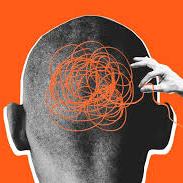

Mental health and substance use disorders are the leading cause of disease burden in the United States. This country case study report will dissect the opioid crisis in the United States, and how the over prescription of pain medication fuels this catastrophe that is affecting the American disease burden in such an astronomical way.
In estimating DALYs specific to the United States, we can create a comprehensive assessment of health issues for this country, that can then be used as a comparative tool with existing mortality data. Currently in the United States, the main contributors to the burden of disease are mental health and substance abuse disorders, cancer, circulatory problems, injuries, musculoskeletal disorders, endocrine-related issues, nervous system problems, chronic respiratory issues, skin diseases, and sense organ diseases. When looking at health outcomes, if we look strictly at mortality rates, we do not get as much of a comprehensive picture. However, it is when we look at the burden of disease more comprehensively as to include disability too, we see that these mental health and substance abuse issues surface as the principle causes of DALYs in America.
It is important to understand the scope of the United States’ healthcare system in order to really analyze issues within the country. The American healthcare system is very exclusive among other developed countries of its same scope. This is because rather than having a universal health system that includes universal coverage, the U.S. has sort of a hybrid system. “In 2014, 48 percent of U.S. health care spending came from private funds, with 28 percent coming from households and 20 percent coming from private businesses. The federal government accounted for 28 percent of spending while state and local governments accounted for 17 percent. Most health care, even if publicly financed, is delivered privately” (Barrows, 2016). This is necessary to understand about the United States health care system because this gives background for why it is so distinguished between who is able to afford healthcare, and who is not. There is a huge gap in healthcare that is significantly aligned with the income gap.
Americans that have incomes below the average are less likely to not visit a doctor when they are sick, get tested for things they are recommended to get tested for, seek treatment, seek follow-up care, fill a prescription, or even see a dentist. These things are preventative measures that contribute to the lower-income people being more at risk for health issues. Healthcare costs are simply too high for less fortunate people to afford, so the natural consequence is that they are not able to afford care with many things. There is no single reason why healthcare costs are rising in the U.S., but health professionals have determined a few contributing factors. One being the cost of innovative technologies and because this advancement ramps up demand for intense and expensive services that might not necessarily cost effective for the system. Secondly, costs could be increasing due to increased chronic disease, namely obesity. The last factor that could be contributing to the inflation of healthcare costs in the United States is the increase in administrative costs.
Social and physical determinants also play a big part in any country’s health systems. Taking a look at the United States’ social determinants of health, for the most part, America is in a pretty good spot, considering the advancement of our economic system. “Understanding the relationship between how population groups experience ‘place’ and the impact of ‘place’ on health is fundamental to the social determinants of health—including both social and physical determinants” (Social Determinants of Health, 2020). Again, America is very divided with the large gap between the rich and the poor, which makes determining what these are very difficult. However, socially, the United States has the ability of resources to meet daily needs, access to education and healthcare, at least in part, public transportation, at least in most cities, and public safety. These things contribute to why the United States in a relatively good spot to be dealing with and addressing issues such as health. Physically, the United States has good infrastructure: schools, hospitals, transportation, road systems. However, access to all of these things is not equal for everyone.
Understanding the implications that a country’s foundation and circumstances have on health is incredibly important, especially when implementing policy. These implications then inform and help unpack why substance abuse and mental are the principle contributors to the U.S. disease burden. The DALY rate per 100,000 people for both sexes was 3,355 in 2015 (Cox, 2017). These two things, mental health and substance abuse are very interconnected. The answer is not entirely clear as to why the two go so hand in hand. However, it is noted that the connection works both ways, they are in a complex dance. “Mental illnesses can increase the risk for alcoholism or drug abuse, sometimes because of self-medicating. On the other hand, alcoholism can lead to significant anxiety and depression that may appear indistinguishable from a mental illness. Finally, one disorder can be worse than the other” (Ellin, 2009). This correlation is quite strong, which is why they are often described in the same category when calculating things like DALY rates for a country. “Fifty percent of those with an addictive disorder will have a psychiatric disorder. And for those who have a psychiatric disorder, about 20 percent have an addiction problem” (Ellin, 2009).
The over prescription of pain medication by doctors is a substantial contributor to the opioid crisis. “Opioids are a class of drugs that include the illegal drug heroin as well as pain relievers available legally by prescription, such as oxycodone, hydrocodone, codeine, morphine, and many others. These drugs are chemically related and interact with opioid receptors on nerve cells in the body and brain” (NIDA, 2020). Doctors are compelled to over prescribe opioids due to modern pressure and lack of doctor-patient communication. Overall, the medical field is incorrectly prescribing these medications. So why, may you ask, are doctors over prescribing? Historically, the use of opioids was limited to very narrow situations like post-surgical pain treatment and end-of-life care because the regulators, experts, and doctors in the field were astutely aware of the addictive characteristics of these drugs and the danger they posed to society. However, big pharmaceutical companies profit billions from the sale of these drugs to doctors. Big pharma set an objective to reverse this conception that opioids posed a threat of danger. The campaign goal was changing the prescription habits of America’s doctors. “Behind every great fortune, the French novelist Honoré de Balzac once observed, lurks a crime. Some crimes kill” (Pizzigati 2018).
Stemming from pressures from pharmaceutical companies, medical professionals are then inclined to push these drugs onto their patients. “Nearly 92 million U.S. adults, or about 38 percent of the population, took a legitimately prescribed opioid like OxyContin or Percocet in 2015, according to results from the National Survey on Drug Use and Health” (Thomson, 2017). These loosely prescribed pain medications are easily prone to create dependencies. According to the U.S. Centers for disease Control and Prevention, he number of opioid overdose related deaths has multiplied by twenty-five since 2000, which is also parallel to the twenty-five percent increase in opioid prescriptions (Thomson, 2017). The line of casualty does not stop here. In fact, of those people that have abused opioid medications, 50% of those people got them handed down from family or friends. This means that a big portion of controlled substances are getting into other peoples’ hands, and this is very dangerous to society.
Dependencies on these drugs are extremely common. After addictions are solidified, people tend to turn to cheaper and more available street drugs such as fentanyl and heroin. “A study of young, urban injection drug users interviewed in 2008 and 2009 found that 86 percent had used opioid pain relievers nonmedically prior to using heroin” (NIDA, 2020). Also, in this study, 75 percent of drug abusers reported that their first opioid was a prescription drug. It is alarming to hear that a large portion of the burden of disease in the United States stems from our medical field. More collateral damages include infants being born with opioid dependencies or diseases spread through the sharing of needles.
Where do we go from here? Doctors can lead the charge with addressing this issue by simply stopping over prescription. Many doctors and health professionals had good intentions, but still worsened the situation by giving out opioids unapologetically. However, they can now be of enormous help to bring it back under control by preventing new addicts. “The challenge is to act with a scalpel and not a sledgehammer, so as not to drive addicts to even deadlier street drugs, or to deny needed medication to people with chronic pain” (USA Today, 2016). Policy and law-making can help this crisis as well. Many states have already passed laws limiting the initial prescription of opioids for acute pain lasting a week. Examples of this is that in New Jersey, doctors may only prescribe for five days, and in Kentucky, they can only prescribe for three days. With these types of restrictions applied, people will be less likely to have surplus drugs for personal use or to sell. Additionally, recent research shows that there are feasible alternatives to opioids. One example is that over the counter Tylenol, steroidal anti-inflammatory drugs, and lidocaine patches work even better than opioids for osteoarthritis, something previously treated with opioid medications for pain.
Prescription opioids have the natural propensity to transition into an addiction. We must ask of our health professionals that they do their part in solving this issue that is plaguing America. The strategy is simple and preventative in nature: keep people from walking through that door in the first place.
References
Barrows, Katie. “The U.S. Health Care System: An International Perspective – Department for Professional Employees, AFL.” CIO, Department for Professional Employees, AFL-CIO, 15 Aug. 2016, www.dpeaflcio.org/factsheets/the-us-health-care-system-an-international-perspective.
Board, The Editorial. “Doctors Fed the Opioid Crisis. Can They Help Cure It?” USA Today, Gannett Satellite Information Network, 20 Mar. 2018, http://www.usatoday.com/story/opinion/2018/03/19/doctors-can-help-cure-opioid-crisis-editorials-debates/439628002/.
Cox, Cynthia, and Bradley Sawyer KFF. “What Do We Know about the Burden of Disease in the U.S.?” Peterson-Kaiser Health System Tracker, 2017, www.healthsystemtracker.org/chart-collection/know-burden-disease-u-s/#item-mental-health-musculoskeletal-disorders-leading-causes-years-lost-disability-u-s.
Ellin, Abby, et al. “How Mental Illness and Addiction Influence Each Other – Addiction Center.” EverydayHealth.com, 2009, http://www.everydayhealth.com/addiction/mental-illness-and-addiction.aspx.
National Institute on Drug Abuse. “Opioids.” NIDA, 2020, www.drugabuse.gov/drugs-abuse/opioids.“Social Determinants of Health.” Social Determinants of Health | Healthy People 2020, 2020, www.healthypeople.gov/2020/topics-objectives/topic/social-determinants-of-health.
Pizzigati, Sam. “The Big Pharma Family That Brought Us the Opioid Crisis.” Inequality.org, 2018, inequality.org/great-divide/big-pharma-firm-brought-us-opioid-crisis/.
Thompson, Dennis. “Doctors Still Overprescribing Opioids in U.S.” WebMD, WebMD, 31 July 2017, www.webmd.com/pain-management/news/20170731/doctors-still-overprescribing-opioids-in-us#1.
 Laura's Writing Portfolio